
Last updated: 2026-08-30
Roofing Everett WA is a roofing company serving Everett and Snohomish County, and roof moss & algae treatment is one of the services we handle most. This page covers what the work involves here specifically — the climate, the code, and what it costs — rather than what it involves in general.
What we do on the first visit
The first visit is an inspection, not a sales call. We walk the roof with you, check the deck from the attic side where we can, count valleys and penetrations, and note the pitch and how much staging or safety equipment the job needs. We confirm whether any prior layers are on the roof already — code allows a maximum of two before a full tear-off is required — and then you get a written per-square price with tear-off and any deck repair as separate lines.
If we think repair is the better spend than replacement, or a different material suits your situation better, we say so on that visit — including when it means the smaller job for us.
What's included
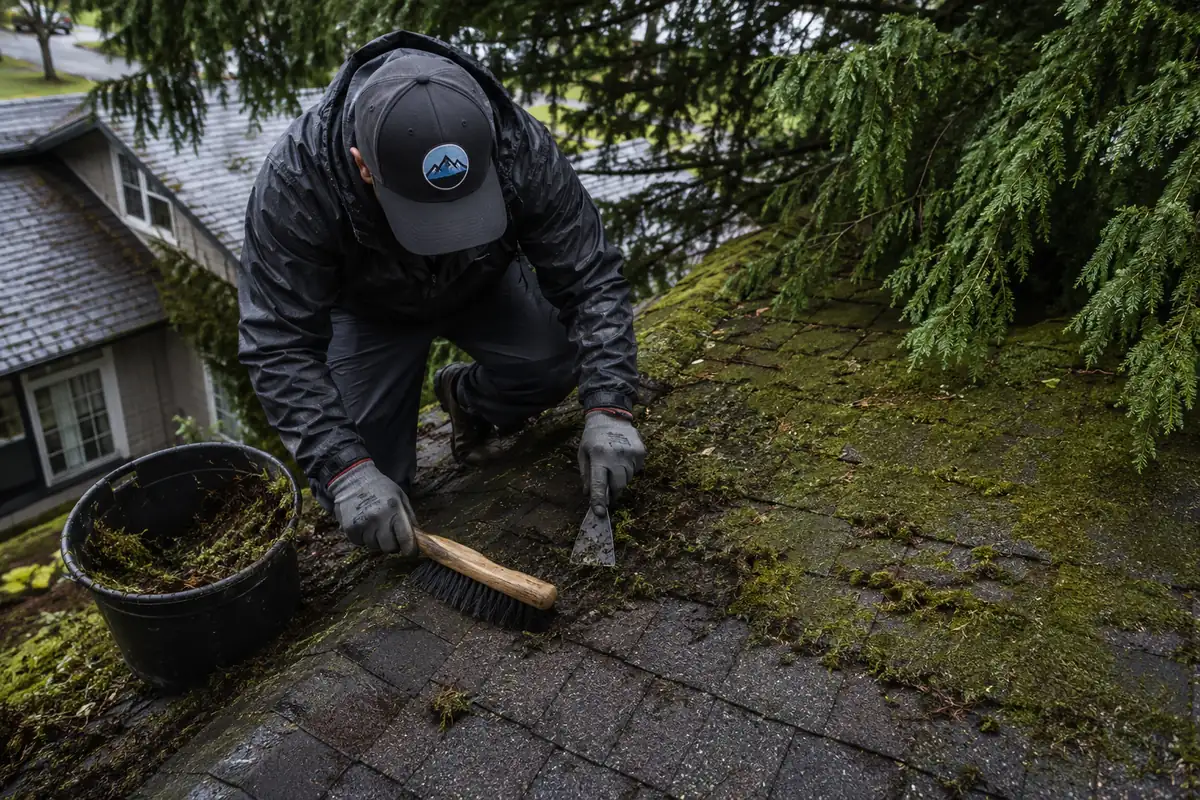
- Hand and soft-brush moss removal — never a pressure washer, which strips the protective granule layer and can drive water under tabs
- Algae/moss treatment application to slow regrowth
- Gutter clearing of moss debris as part of the same visit
- An honest assessment of whether the roof underneath is still sound or already needs replacement
- A recommended treatment interval sized to the specific lot's shade and moisture exposure
What this costs in Everett
Roof Moss & Algae Treatment runs $300–$800 standard home, treatment in this area. Consistent with the general Puget Sound contractor-published range for moss/algae removal, trending higher for larger homes or heavy moss coverage. The things that move a job up its range are tear-off, how much deck repair is needed, pitch, and how many valleys and penetrations your roof has. If you want a number before you call, the roof cost calculator will get you close.
When it needs doing
- Visible moss growth on north-facing or heavily shaded roof sections
- Shingles or shakes lifting where moss has grown underneath
- Green or black algae streaking on shingle surfaces
- Gutters filling with moss debris
- A neighbor's tree canopy shading a significant portion of the roof
Related reading
These go deeper on the questions that come up most on this job: